

Current Affairs Notes: Sarnath Becomes India’s 45th UNESCO World Heritage Site (2026)
Why in News?
The Ancient Buddhist Site of Sarnath, located in Uttar Pradesh, was officially inscribed on the UNESCO World Heritage List during the 48th Session of the World Heritage Committee held in Busan, Republic of Korea, on 25 July 2026. With this recognition, Sarnath becomes India’s 45th UNESCO World Heritage Site.
About Sarnath


4
- Location: About 10 km from Varanasi, Uttar Pradesh.
- One of the four holiest Buddhist pilgrimage sites associated with the life of Gautama Buddha.
- Ancient names:
- Rishipatana (Isipatana)
- Mrigadava (Deer Park)
Historical Significance
After attaining enlightenment at Bodh Gaya, Gautama Buddha delivered his first sermon at Sarnath.
This event is known as:
Dharmachakra Pravartan (Turning the Wheel of Dharma)
It marks:
- Beginning of Buddha’s public teachings.
- Formation of the first Buddhist Sangha (monastic community).
- Start of the spread of Buddhism across Asia.
Major Monuments at Sarnath
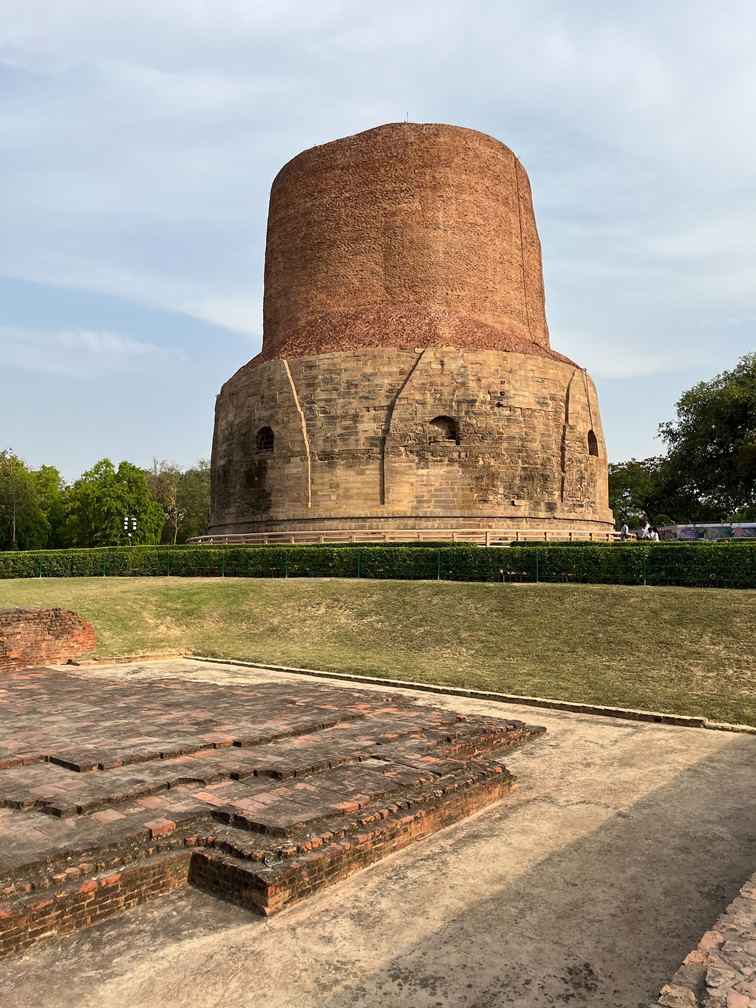
Dhamek Stupa
- Built at the place where Buddha delivered his first sermon.
- One of the finest surviving Buddhist stupas.
Dharmarajika Stupa
- Originally constructed by Emperor Ashoka.
- One of the earliest Buddhist stupas.
Chaukhandi Stupa
- Marks the place where Buddha met his first five disciples.
- The octagonal tower was added during the Mughal period.
Ashokan Pillar
- Built by Emperor Ashoka.
- The Lion Capital from this pillar was adopted as the National Emblem of India.
Sarnath Museum
- Established in 1904.
- India’s oldest site museum.
- Houses the original Lion Capital and several Gupta-era sculptures.
UNESCO Recognition
- Inscribed during the 48th Session of the World Heritage Committee.
- Venue: Busan, Republic of Korea.
- Date: 25 July 2026.
- Sarnath remained on UNESCO’s Tentative List since 1998, taking about 28 years to achieve full inscription.
Importance of UNESCO Status
The recognition will:
- Protect the site’s Outstanding Universal Value.
- Strengthen heritage conservation.
- Boost international tourism.
- Promote India’s Buddhist heritage globally.
- Enhance the Buddhist Circuit connecting Bodh Gaya, Sarnath, Kushinagar, and Lumbini (Nepal).
- Improve cultural diplomacy with Buddhist-majority countries such as Japan, Thailand, Sri Lanka, Myanmar, Cambodia, Vietnam, South Korea, and Mongolia.
India’s Position After Sarnath’s Inclusion
- 45 UNESCO World Heritage Sites
- 6th highest number of World Heritage Sites globally.
- 2nd in the Asia-Pacific region.
Archaeological Importance
The site contains remains dating from approximately the 3rd century BCE to the 12th century CE, including:
- Stupas
- Monasteries
- Temples
- Ashokan Pillar
- Sculptures
- Gupta-era Buddhist art
The Archaeological Survey of India (ASI) has been excavating and conserving Sarnath for over 150 years.
UNESCO World Heritage Convention
- Adopted in 1972.
- Protects cultural and natural heritage of Outstanding Universal Value.
- India is a State Party to the Convention.
- Only sites on a country’s Tentative List are eligible for nomination to the World Heritage List.
Exam Quick Facts
| Topic | Fact |
|---|---|
| State | Uttar Pradesh |
| Nearest City | Varanasi |
| UNESCO Status | India’s 45th World Heritage Site |
| Year of Inscription | 2026 |
| Ancient Names | Rishipatana, Isipatana, Mrigadava (Deer Park) |
| Famous Event | Buddha’s First Sermon |
| Sermon Name | Dharmachakra Pravartan |
| National Emblem | Lion Capital of Ashoka |
| Oldest Site Museum | Sarnath Museum (1904) |
| Tentative List Since | 1998 |
| World Heritage Committee Session | 48th |
| Venue | Busan, Republic of Korea |
Practice MCQs
Q1. Sarnath is associated with which event in the life of Gautama Buddha?
A. Birth
B. Enlightenment
C. First Sermon
D. Mahaparinirvana
Answer: C. First Sermon
Q2. The Lion Capital adopted as India’s National Emblem was discovered at:
A. Bodh Gaya
B. Nalanda
C. Sarnath
D. Kushinagar
Answer: C. Sarnath
Q3. The event known as Dharmachakra Pravartan refers to:
A. Buddha’s birth
B. Buddha’s enlightenment
C. Buddha’s first sermon at Sarnath
D. Formation of the Mauryan Empire
Answer: C. Buddha’s first sermon at Sarnath
Q4. Sarnath became India’s ____ UNESCO World Heritage Site.
A. 43rd
B. 44th
C. 45th
D. 46th
Answer: C. 45th