

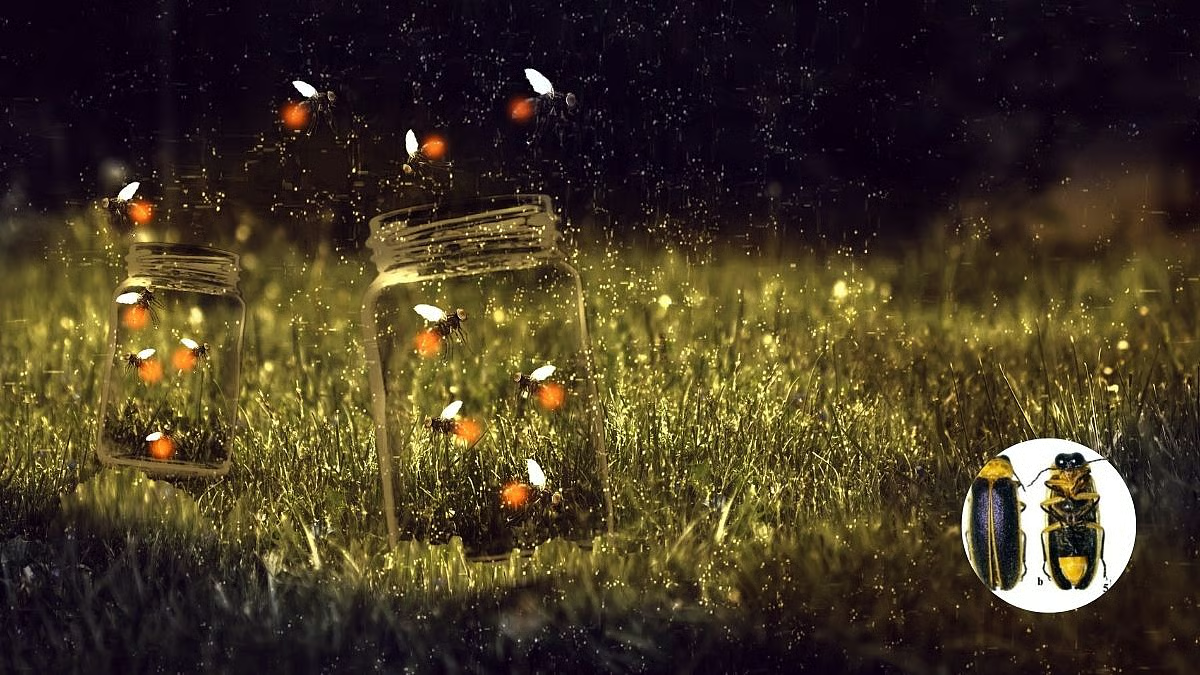
Why in News?
Researchers from Northeast India have discovered new firefly species in Meghalaya, highlighting the region’s exceptional biodiversity and the need for stronger conservation efforts.
Key Highlights
- Scientists from Assam Don Bosco University and Debraj Roy College (Autonomous), Assam identified a new firefly species from Mawsynram, Meghalaya, the world’s wettest place.
- The newly discovered species has been named Pygoluciola mawsynram, after Mawsynram, recognizing the region’s unique biodiversity and the traditional conservation practices of the Khasi community.
- The discovery was published in the Asian Journal of Conservation Biology.
- This discovery:
- Increases the total number of known Pygoluciola species worldwide from 28 to 29.
- Makes it the 5th recorded Pygoluciola species from India.
- Researchers surveyed 29 locations across different habitats in Meghalaya before documenting the species.
Significance
- Demonstrates the rich but underexplored biodiversity of Northeast India.
- Reinforces Meghalaya’s importance as part of the Indo-Burma Biodiversity Hotspot.
- Highlights the role of community-led conservation, especially by the Khasi people.
- Encourages further taxonomic research and biodiversity documentation in India’s Northeast.
About Fireflies
- Fireflies belong to the family Lampyridae (order Coleoptera).
- They are famous for bioluminescence, produced through a chemical reaction involving luciferin, luciferase, oxygen, and ATP.
- Their light is mainly used for:
- Mate attraction
- Communication
- Warning predators
About Meghalaya
- Known as the “Abode of Clouds.”
- Home to Mawsynram, officially recognized as the wettest place on Earth.
- Lies within the Indo-Burma Biodiversity Hotspot, one of the world’s richest regions for endemic flora and fauna.
Previous Related Discovery
Earlier in 2026, researchers also reported two new glowing firefly species from Meghalaya:
- Diaphanes meghalayanus
- Diaphanes mawlynnong
These discoveries further emphasize Meghalaya’s importance as a hotspot for insect diversity.
Prelims Facts
- Species discovered: Pygoluciola mawsynram
- Location: Mawsynram, East Khasi Hills, Meghalaya
- Family: Lampyridae
- Order: Coleoptera
- Biodiversity Hotspot: Indo-Burma
- State: Meghalaya
- World record: Mawsynram is the wettest place on Earth.
Practice MCQ
Q. The recently discovered firefly species Pygoluciola mawsynram is associated with which Indian state?
A. Arunachal Pradesh
B. Nagaland
C. Meghalaya
D. Mizoram
Answer: C. Meghalaya
Q. Pygoluciola mawsynram, recently seen in the news, belongs to which of the following groups of organisms?
A. Butterflies
B. Beetles
C. Dragonflies
D. Moths
Answer: B. Beetles
Explanation: Fireflies belong to the family Lampyridae, which is part of the order Coleoptera (beetles).
Q. Mawsynram, where the newly discovered firefly species Pygoluciola mawsynram was identified, is globally renowned for being:
A. India’s highest plateau
B. The world’s wettest place
C. The largest mangrove forest in India
D. The deepest river valley in India
Answer: B. The world’s wettest place
Explanation: Mawsynram, located in Meghalaya’s East Khasi Hills district, receives the highest average annual rainfall in the world and is recognized as the wettest place on Earth.